
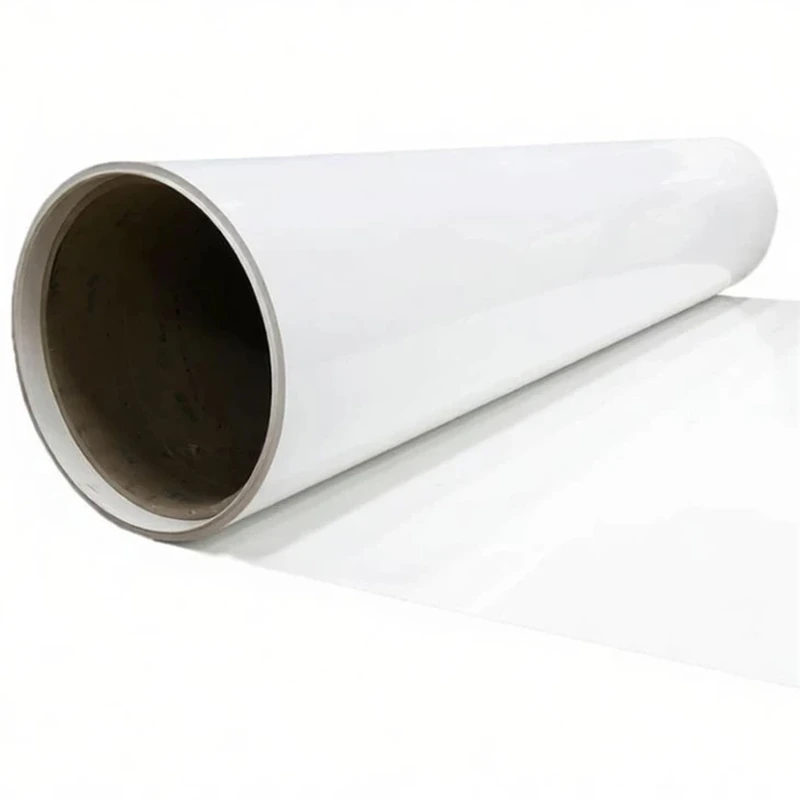
Single-skin FRP gelcoat panels for caravan and motorhome exteriors, interior liners and furniture faces — a finished surface that comes off the roll ready to fit,
with no paint shop in between.
An RV lives two lives. Outside it is a vehicle parked in the weather for years at a time; inside it is a room its owners inspect from thirty centimetres away. That is the case for gelcoat panels for RVs: one material answering both surfaces, where the alternatives make you finish each one twice — aluminium gets primed and painted or wrapped, plywood gets laminated, and every extra process adds a station on the line, a supplier to chase and weight that never comes back out.
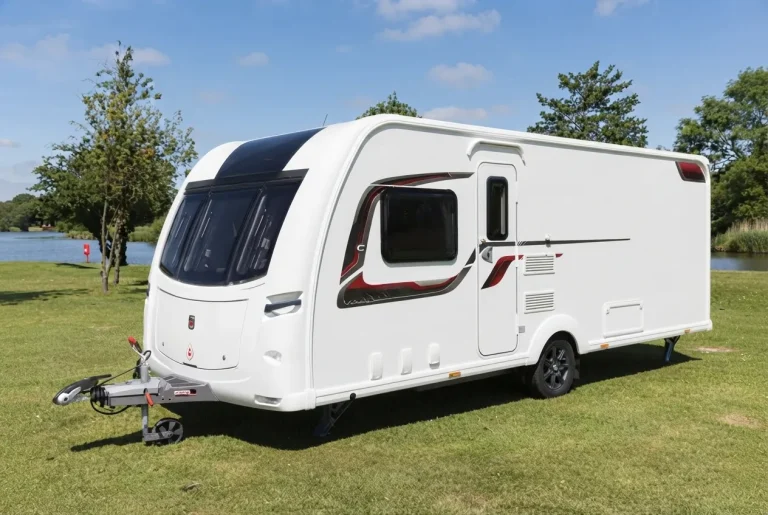
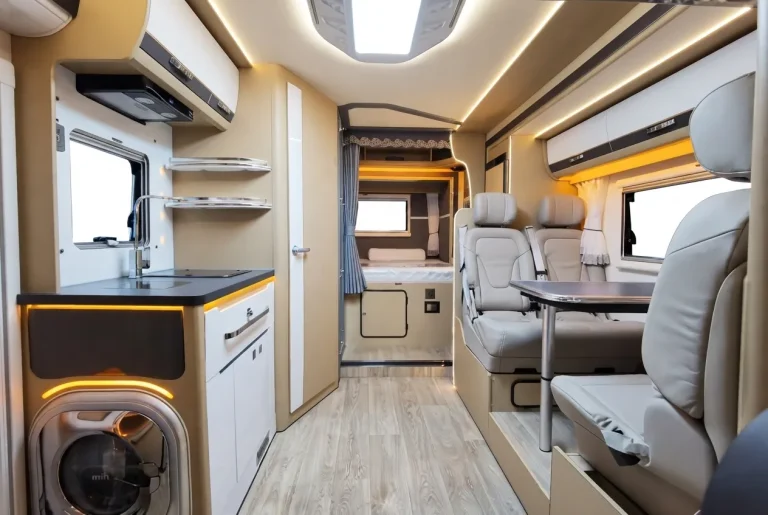
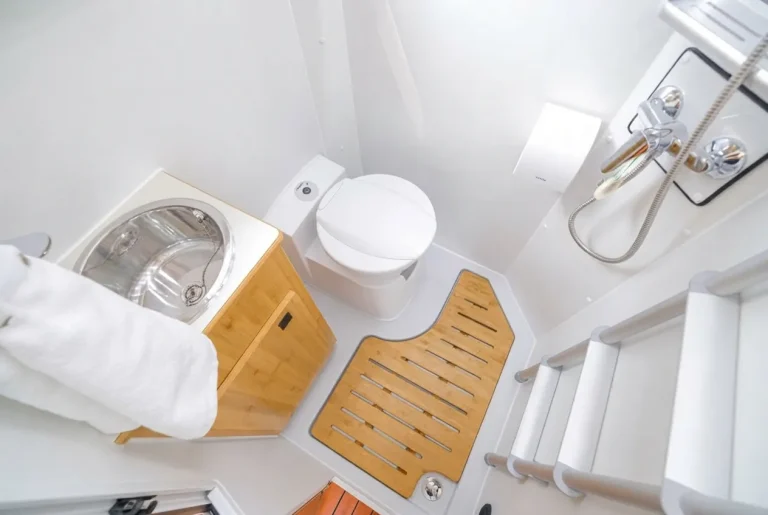
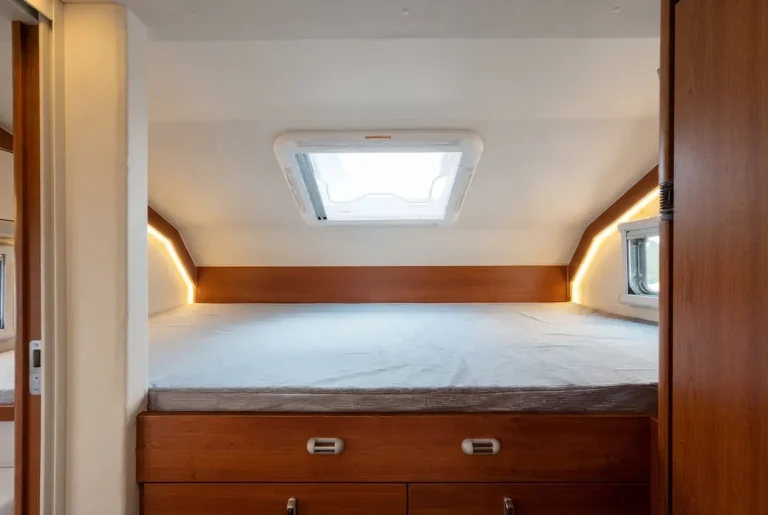
A gelcoat panel takes that step away. SKD’s Standard Gelcoat Panels are glass-reinforced polyester sheets with the gelcoat face built in rather than added afterwards, so colour and gloss are set when the sheet is made. Caravan and motorhome builders use one material for the skin over the frame, the liner facing the occupants, and the faces of cabinets and washroom pods.
This page covers the surface panel itself. Where the question is which insulated core goes into walls, roof and floor, our RV & caravan panel guide works through that separately.
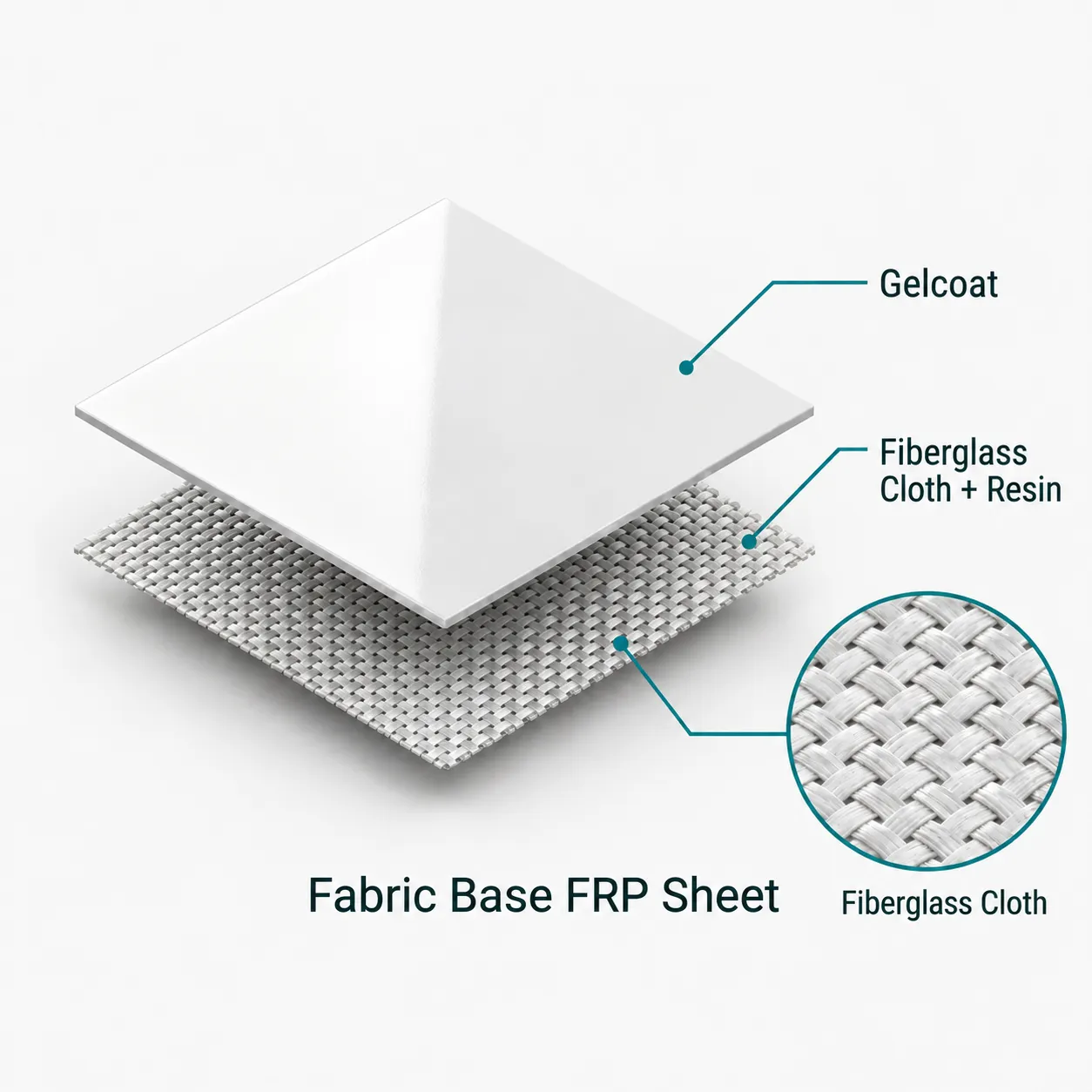
Two parts make up the sheet:
The fabric or mat face belongs to that laminate rather than standing as a layer of its own. It is the laminate’s outer surface — the one left open for bonding, forming and fastening — and it is the face that decides how the panel behaves when you cut it, curve it or join it into place. Read as a technical section, the sheet is two parts, not three.
| Item | Detail |
|---|---|
| Resin System | Unsaturated polyester resin |
| Skin Thickness | 0.8mm–5.0mm |
| Max Width | up to 3,400mm |
| Standard Roll Length | up to 120m |
| Operating Temperature | -40°C to +140°C |
| Color | RAL color matching available |
| Warranty | 10–15 years |
Because a gelcoat panel is supplied wound on a roll, its length is not tied to the container it travels in. Rolls run to 120m and the sheet reaches 3,400mm across, so a caravan line can order the run a wall actually needs instead of designing around a shipping limit. Where cut sheets suit your process better, give us the sizes and we trim them at the factory — same roll, cut before packing.
A: It depends on the part. On an exterior wall, what we supply here is the outer surface; the insulation that keeps the interior comfortable sits in the core behind it, and our RV & caravan panel guide sets out which core suits walls, roof and floor. On a cabinet front or an interior liner there is usually nothing behind the gelcoat panel at all.
A: Send the RAL reference, or a physical sample if the shade has to be exact. RAL colour matching is available, and we will confirm the target before the run starts.
A: Sheet thickness covers 0.8mm to 5.0mm. The heavier end goes on surfaces that take impact and handling — exterior panels, wheel arches, boot liners — while the thin end suits liners and furniture faces, where appearance and cleanability are what matter. Tell us the part and the process and we will recommend a gauge.
A: The sheets are rated for continuous service between -40°C and +140°C, which covers the temperature swings a vehicle sees in service and in storage.
A: Order the length. Because the material arrives on a roll rather than in fixed sheets, a side wall can often be covered in one piece — fewer joints means fewer places for water to find its way in and less sealing work on the line.
A: No repainting is needed. The gelcoat face is non-porous, so routine washing with mild detergent keeps it clean; avoid abrasive pads and solvent-based cleaners, which dull the surface over time.
We’d love to hear about your project — reach out anytime.
Thank you for contacting us,
we will get back to you in 24hrs!