
FRP-faced PU core sandwich panels for refrigerated truck and trailer bodies — the strongest insulation option in SKD’s sandwich range,
built to hold cargo temperature on every trip and cut the fuel your reefer unit burns.
A refrigerated truck body pays for itself in temperature stability: every time a door opens or the sun beats on the roof, the insulation decides how hard the reefer unit works, how much fuel it burns, and whether cargo arrives inside its required range. A body that loses that fight costs a carrier money in fuel, product, and failed temperature audits.
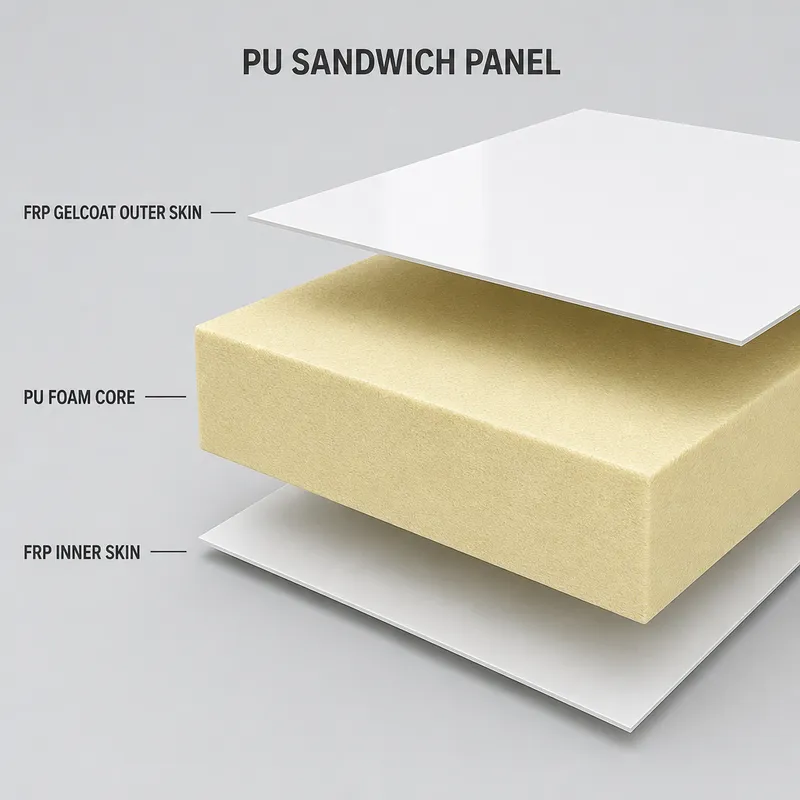
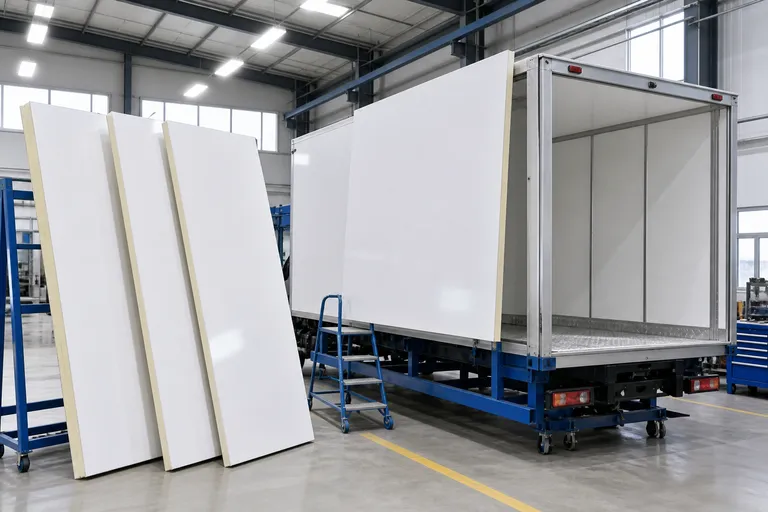
SKD’s PU Sandwich Panels for refrigerated truck bodies pair our weather-resistant FRP gelcoat skins with a rigid polyurethane foam core — the highest-efficiency insulation option across our sandwich panel range. This variant page focuses on how that construction performs specifically in van bodies, reefer trailers, and multi-temperature delivery fleets, where bodybuilders and fleet operators spec panels for thousands of working hours of vibration, washdown, and temperature cycling.
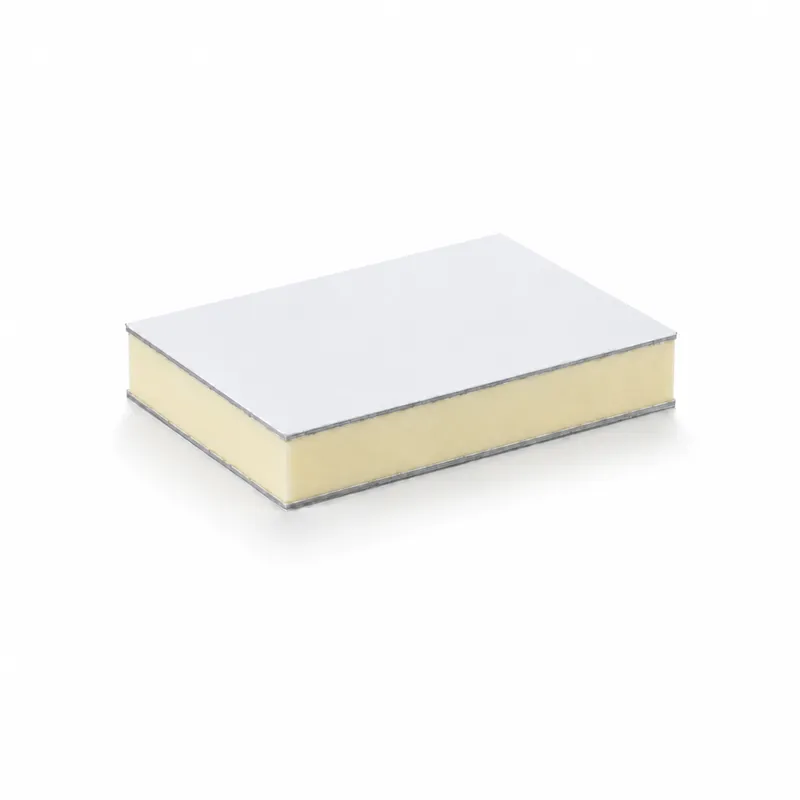
Three layers do three jobs:
| Specification | Value |
|---|---|
| Overall Thickness | Custom, made to order |
| Panel Width | Up to 3,400mm |
| Panel Length | Up to 11,800mm (40 ft container limit) |
| Core Density (Standard) | 40–45 kg/m³ |
| Core Density (High-Strength) | 48–50 kg/m³ |
| Warranty | 10–15 years, consistent with FRP Gelcoat Panels |
| Core Material | Polyurethane (PU) foam |
| Skin Material | FRP gelcoat (outer) + FRP (inner) |
Two figures define what we can deliver. Our production line runs widths up to 3,400mm and single-piece lengths up to 11,800mm. Keep one thing in mind when you specify: a rigid sandwich panel cannot be rolled, so the container it ships in sets the practical size limit — dimensions that exceed the container cannot be shipped. Send your body layout and destination port and we will confirm the shippable sizes for your build.
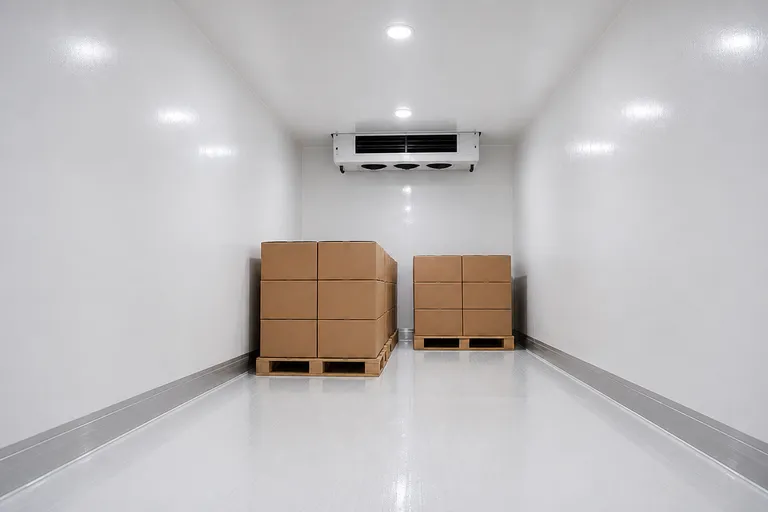


A: Choose PU when insulation efficiency and temperature stability are the priority — it is the strongest insulator in our sandwich range and the usual specification for frozen and chilled freight. XPS core delivers solid insulation at a more budget-friendly price point for less demanding routes. Tell us the cargo, route, and target temperature and we will recommend the core. Whichever way you go, check that quoted thermal figures use the same method — rigid foam performance is normally reported per ASTM C518.
A: Our standard PU core runs 40–45 kg/m³ and is the go-to for body walls and roofs. The 48–50 kg/m³ high-strength core adds rigidity for panels that must carry structural load. Both options insulate; the denser core trades a little weight for more stiffness.
A: Yes. Thickness and dimensions are made to order, so a workshop can order single panels cut to match the original body and install them without rebuilding the unit. Send the panel size, thickness, and fixing layout and we will quote the match.
A: Yes — the FRP surfaces are smooth, non-porous, and easy to clean, supporting the washdown and sanitation routines those chains require. For shipments into the United States, the rule that governs temperature-controlled food transport is the FDA’s Sanitary Transportation of Human and Animal Food. Where direct food contact standards are part of your requirement, contact our team and we will confirm the applicable specification for your market.
A: The FRP gelcoat skins are built on the same FRP gelcoat technology as our Gelcoat Panels line and carry the same ASTM and SGS certification backing. Ask for the relevant documentation with your inquiry.
We’d love to hear about your project — reach out anytime.
Thank you for contacting us,
we will get back to you in 24hrs!