
Single-skin FRP gelcoat panels for truck body siding and interior liners,
supplied in rolls with a factory-finished surface and custom colour and thickness options.
Dry freight truck body manufacturers need exterior and interior panel materials that hold up in service, stay clean, and are practical to fabricate. The panel has to suit the body design, fit the support structure that is already there, and keep its appearance consistent from the first body of a run to the last.
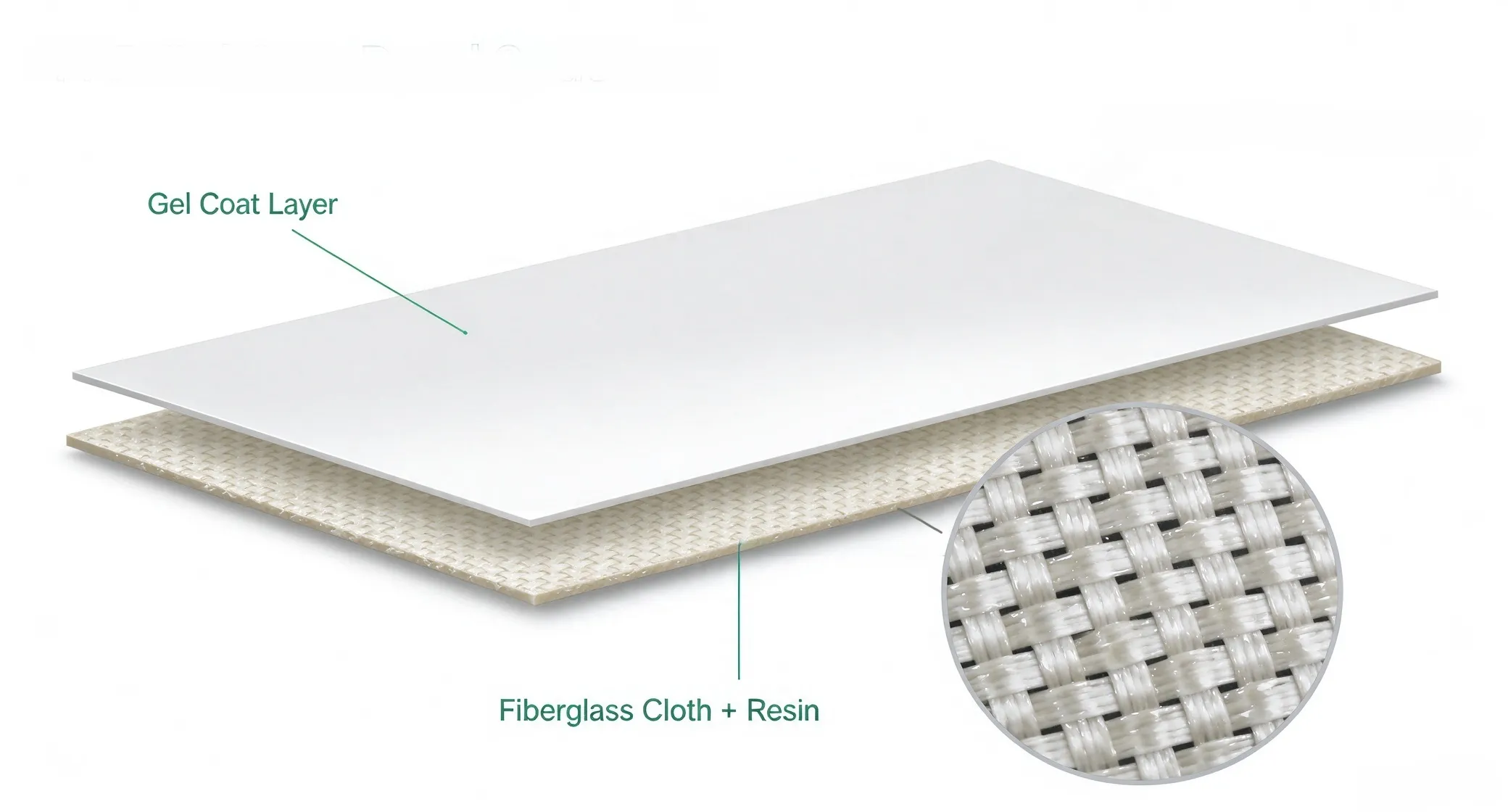
This page is about the single-skin FRP gelcoat sheet — a glass-reinforced sheet whose gelcoat surface is part of the material as supplied. The product line is named FRP Gelcoat Panels; this page covers the single-skin sheet within it, used as an exterior siding sheet or an interior lining sheet installed over a supporting frame or substrate chosen as part of the body design. It is not a complete bonded body panel, and it is not a substitute for a sandwich panel where the body design calls for one.
The figures on this page describe the sheet itself. How much of it a given body needs is settled by the body design, so read them as the input to that decision rather than as the decision.
The wider gelcoat panel range — general specifications and surface options — sits on our Standard Gelcoat Panels page. Where a body design needs an integrated core, insulation or a stiffer bonded panel, those needs are covered by FRP Sandwich Panel for Truck Body and by PU Sandwich Panels for Refrigerated Trucks. For the material comparison behind that choice, see FRP Sandwich Panels vs Traditional Refrigerated Truck Materials.
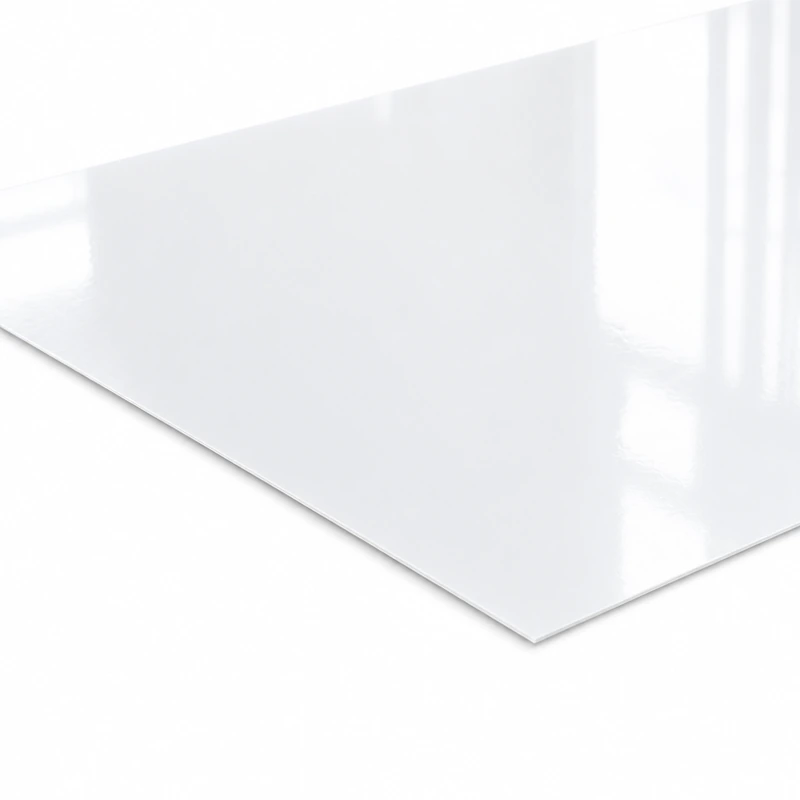
These are two different constructions rather than two grades of the same thing, and truck bodies are built with both.
A dry freight body may use either construction. The right choice depends on the body structure, the insulation required and the panel’s intended function rather than the truck category alone — and the two are not interchangeable across every application. Send us the body construction and the part you are sourcing, and we will say which side of this line your sheet sits on.
| Body application | What to consider | Product role |
|---|---|---|
| Exterior side-wall siding | Weather exposure, appearance, fixing method and how the panel is supported | Factory-finished FRP outer panel |
| Interior wall and ceiling liners | Cleanability, scuff resistance, thickness and edge finishing | Cargo-facing lining panel |
| Bulkhead and door-area lining | Local impact risk, cut-outs, edge protection and fixing details | Application-specific panel, subject to design review |
Other potential applications. Roof skins, front bulkheads and door or opening surrounds may be considered for specific body designs. Suitability depends on the support structure, impact requirements, cut-outs, edge finishing and fixing details. These applications are assessed case by case rather than offered as standard recommendations — contact our team with the detail for a case-by-case assessment.
Road vibration and panel support. A truck body sees repeated vibration and movement in service. Sheet thickness, support spacing, fastening details and the quality of installation all affect how the panel performs over years of work. The panel should be specified as part of the body design rather than treated as a standalone structural component.
Impact and surface wear. Interior liners meet pallets, trolley frames, tools and cargo that shifts in transit. The glass-reinforced laminate provides the sheet’s mechanical properties and the gelcoat face provides the finished surface. How any particular impact turns out depends on sheet thickness, how the panel is supported, and how severe the impact is.
Moisture, road spray and cleaning. The non-porous gelcoat face resists moisture uptake and supports routine cleaning without refinishing. On exterior work the installation as a whole also has to deal with cut edges, joints, fasteners, and anywhere water could get in behind the panel.
Fabrication and edge finishing. A cut edge exposes the glass-reinforced substrate. Depending on the body design, edges and joints may call for trim, sealant or another protective finishing method, and fixings should be chosen to suit the frame and the intended service conditions.
| Item | Detail |
|---|---|
| Sheet Thickness | 0.8mm–5.0mm (single-skin sheet) |
| Max Width | up to 3,400mm |
| Roll Length | up to 120 m |
| Resin System | Unsaturated polyester resin |
| Operating Temperature | -40°C to +140°C |
| Colours | Custom RAL available |
| Surface Finish | Glossy (standard) / Wood grain / Trefoil (anti-slip) / Bubble / Pearl / Leather |
| Warranty | 10–15 years, subject to application and order terms — confirmed at quotation |
Glossy is the standard finish for truck body panel applications. Alternative textures are subject to product availability and to their suitability for the intended installation; confirm the required finish when you request a quotation.
This product line is supplied in rolls, with widths up to 3,400 mm and roll lengths up to 120 m, subject to production requirements. Please share your required roll dimensions so we can confirm the available specifications.
Colour is agreed before the run starts. Provide the shade you are working to, and where the match has to be exact, a physical sample as well — we confirm the target with you before the line starts
A: Not in every application. The single-skin sheet is used as siding or a lining over a suitable supporting structure; a sandwich panel is a bonded FRP-and-core construction, used where the design requires an integrated core or insulation. Which one fits depends on the body design.
A: Sheet thickness runs from 0.8 mm to 5.0 mm. What decides the number is the application, the support spacing, the fixing method and the loads the sheet is expected to see — there is no fixed recommendation per part. Share where the panel will be installed and how the body is constructed, and we will review the options with you.
A: Yes, where the body design gives the panel suitable support and fixing. The required thickness, panel dimensions, edge finishing and installation details should be confirmed for the specific vehicle and its operating conditions.
A: Not from this line — the sheet is supplied in rolls, and the bodybuilder cuts each piece to the body’s dimensions. Roll width and length are confirmed against what we can run; send your figures with the enquiry.
A: No. The panel is intended as a lining, not as a structural load-bearing component. It serves as the cargo-facing surface — a finished face that is practical to clean and intended to withstand routine scuffing. Racking, tie-down loads and structural requirements stay with the body’s frame and its own engineering.
A: ASTM test reports and SGS documentation are available for selected products and properties, subject to the applicable report scope. Send us the performance requirement or market standard you need to verify, and the applicable report for the quoted panel is confirmed before ordering. Panel structure, materials and certification are set out on our technical information page.
We’d love to hear about your project — reach out anytime.
Thank you for contacting us,
we will get back to you in 24hrs!