An FRP panel datasheet can share a layout, a typeface and a list of headings and still describe a different product. The format is standard because the trade is standard, not because the contents are. So the work is not reading a datasheet. It is knowing which of its lines can be compared with another supplier’s, and which are there to fill a row.
A datasheet defines specifications, not guaranteed performance in every application
A datasheet sets out specifications, the conditions they were established under, and the range they apply to. It becomes a contract document only when a contract or purchase order incorporates it by reference, which is a separate act from publishing it.
What it does not do is predict. Nothing on it tells you how a panel will behave over a steel frame with 6 m bays, in a room hosed down twice a day, against a wall built to another tolerance. Those are examples of project conditions, not standard service conditions for the product.
Separate the two and the questions sharpen. You stop asking whether a panel is good, and start asking good against what, measured how, on which sample.
Specifications to Compare First
Dimensions come first, not because they compare cleanly, but because they decide whether the panel can be made, shipped and installed at all. Each one still needs its basis confirmed before the comparison means anything.
Finish and colour come next. A finish name only helps if it arrives with the property it delivers. A colour only helps if it names a system and a tolerance: RAL matching is checkable, and “white” becomes checkable once the colour code, the permitted colour difference and the surface effect are named.
Some fields need more context than others before they can be compared. Those are the ones worth slowing down on, and they are the subject of the next section.
Where one word carries two meanings
Thickness. A single figure can describe the sheet as supplied, the substrate beneath the gelcoat, or the coating itself. For gelcoat sheets, confirm whether the stated thickness refers to the finished sheet or the underlying FRP substrate. For sandwich panels, distinguish facing thickness from overall panel thickness. The distinction affects panel weight, stiffness and fixing requirements.
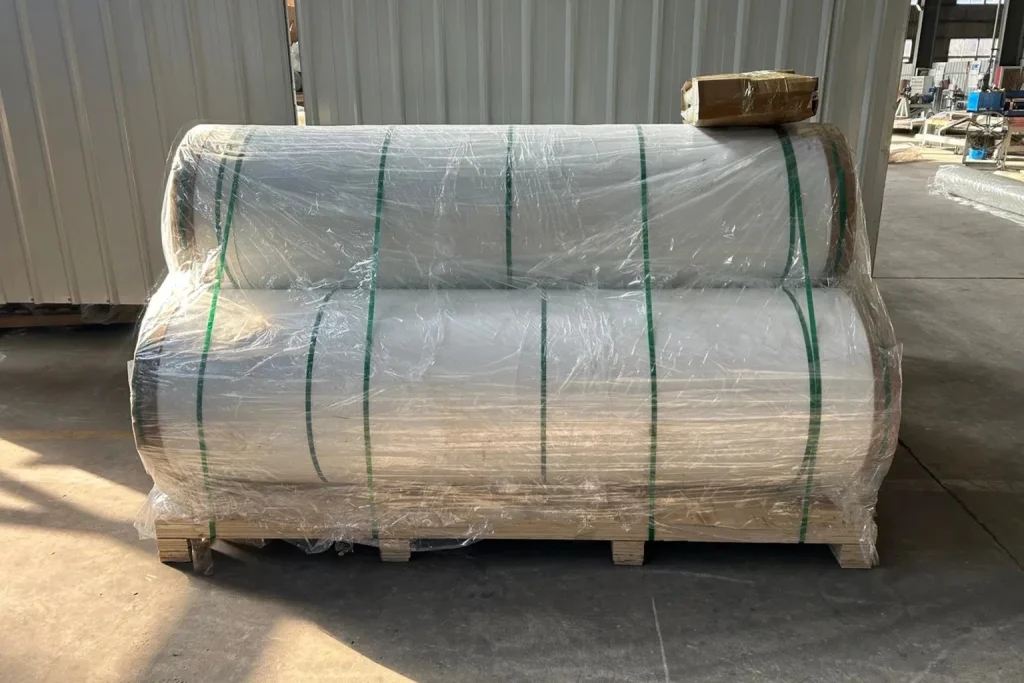
Width. There is a width the line produces and a width that ships. SKD lists a maximum production width of 3,400 mm for its standard gelcoat sheets. What actually leaves the factory is set by the container, the door opening, the packing and the loading direction, so treat any shippable width as the working figure for one arrangement rather than a ceiling for every shipment. Gelcoat sheet travels in roll form, which is why container width constrains it less than it constrains rigid sandwich panels. Confirm the transportable dimensions for the planned shipment before finalising the panel drawings.
Temperature. A range means little without the conditions attached to it: which product it was measured on, against what method, and whether it covers continuous use or short exposure. On a sandwich panel the facing, the core and the adhesive each contribute, so the question worth asking is the rated range of the complete panel with its test basis, not a figure inherited from the facing.
Compliance. Food-contact compliance depends on the material, the applicable regulatory requirements and the intended conditions of use. The FDA maintains its own framework for food-contact substances, down to the food types and conditions of use. “FDA approved” applied to a whole FRP panel is the form to be careful with. A defensible compliance claim sets out all three, and ties them to supporting documentation that names the product assessed and the layer tested.
What an FRP panel datasheet cannot tell you
Some of what an FRP panel datasheet leaves out is product evidence. Some is system evidence, and that list is longer than most buyers expect.
On the product side, ask for evidence of chemical resistance, colour performance and fire classification. Each requires a defined test method or classification basis, with supporting evidence relevant to the product and intended application.
For the installed system, check three things: whether the required fire performance has been demonstrated for the complete assembly, how flat the substrate is and who answers for it, and how the joints take movement along a long wall.
An FRP panel datasheet alone cannot establish how the panel will perform within a complete installation.
Questions beyond the FRP panel datasheet
A short list, sent before the order rather than after:
- The test report itself, not the summary line, and the sample it was run on
- Which layer that report covers: face, substrate, or finished assembly
- The testing standard, the conditions, the sample build-up and the result
- The warranty terms in writing, including what voids them
- The batch or lot number, as part of the order confirmation and delivery documents rather than as a datasheet field
Then one written answer to the question a sheet cannot reach: what the panel is expected to do on your substrate, with your fixings, in your cleaning regime.
We hold ourselves to the same list. On select product lines our reports identify the sample tested and the layer covered, because a report that does not name its sample has answered a different question.
Send us the two datasheets you are comparing and the application. We will tell you which lines actually differ, and which ones only look different.