
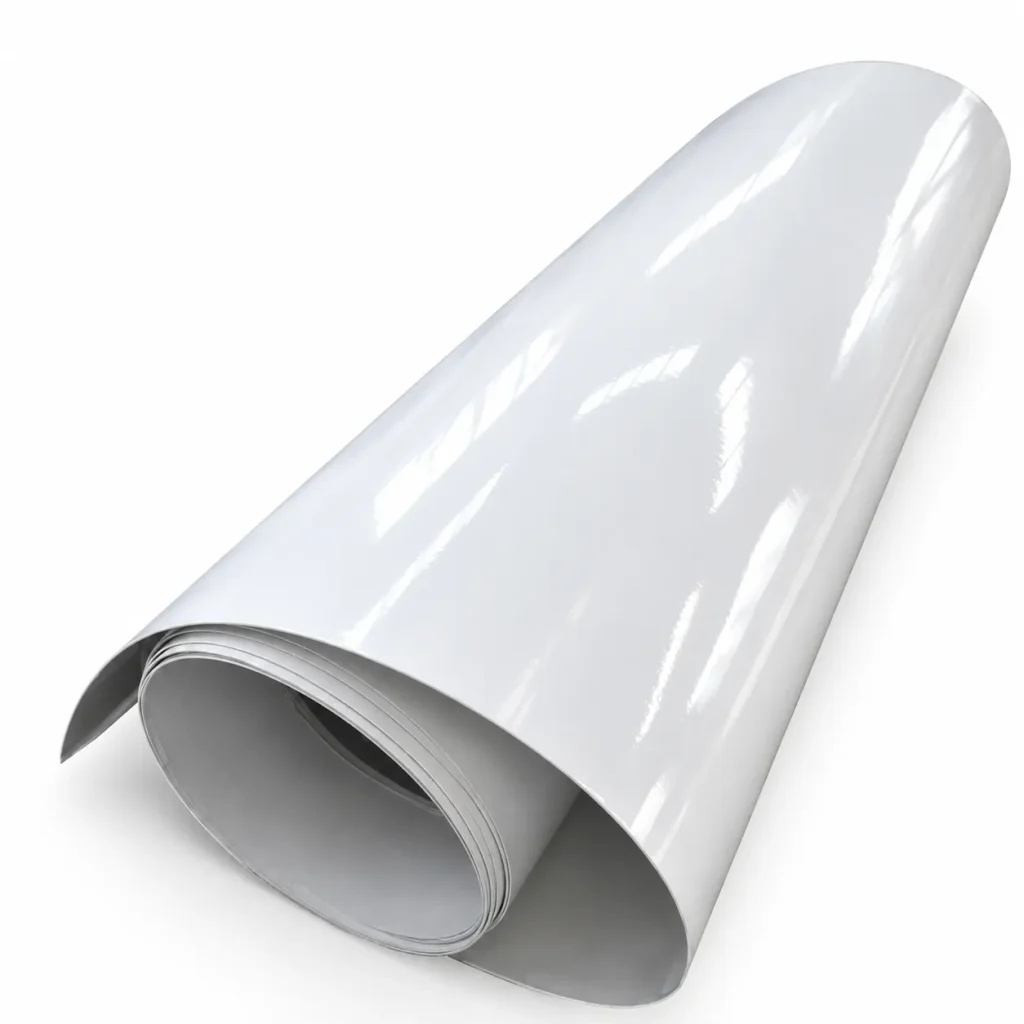
Single-skin FRP gelcoat sheet supplied in whole rolls,
for panel makers who laminate the inner and outer faces of refrigerated truck body panels.
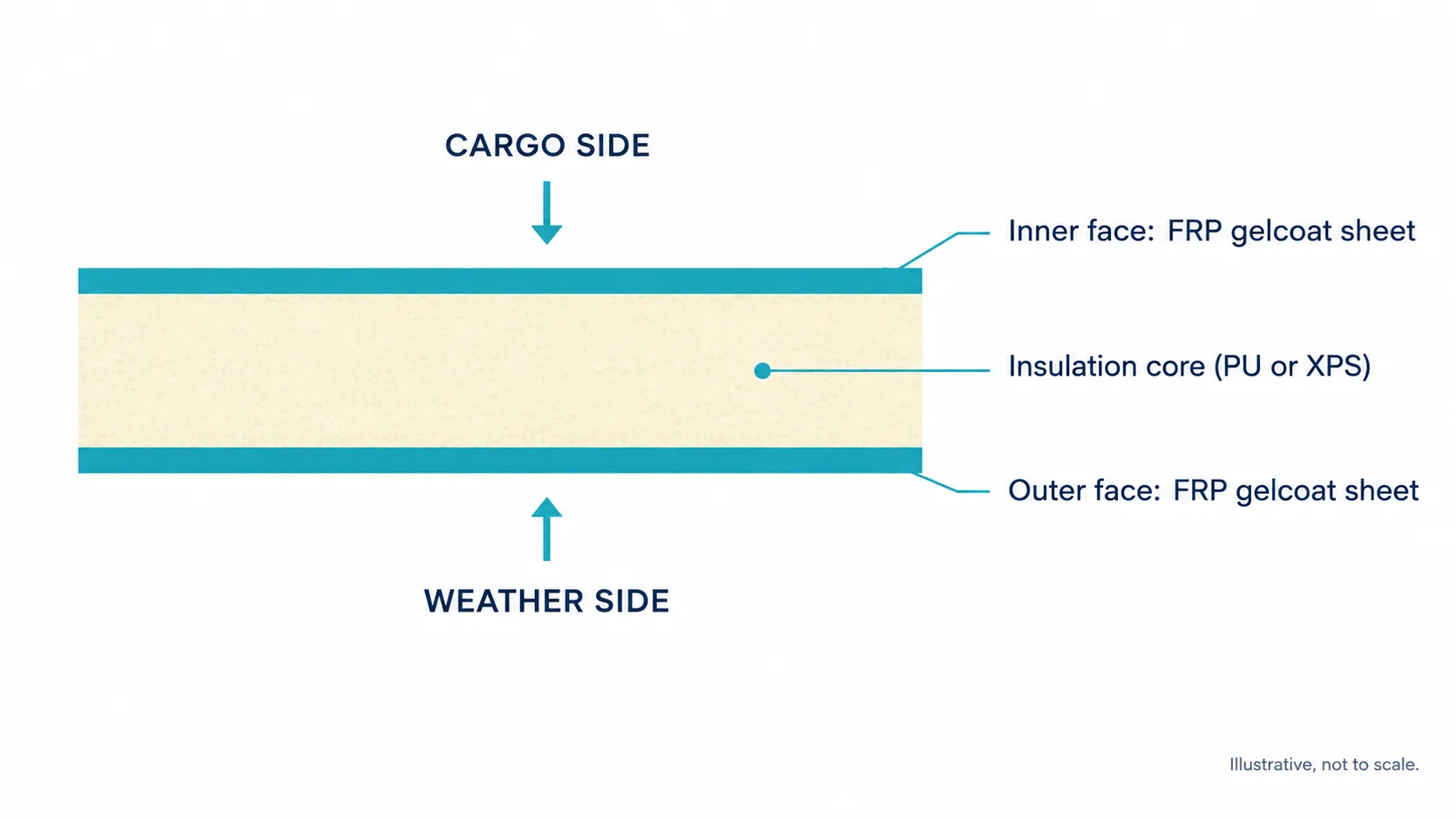
A refrigerated truck body panel is a sandwich: an inner face toward the cargo, an insulation core, and an outer face toward the weather. Either face can be a single-skin FRP gelcoat sheet. This page covers that sheet: the facing material a panel maker bonds to the core. The product line is named FRP Gelcoat Panels; this page covers the single-skin sheet within it.
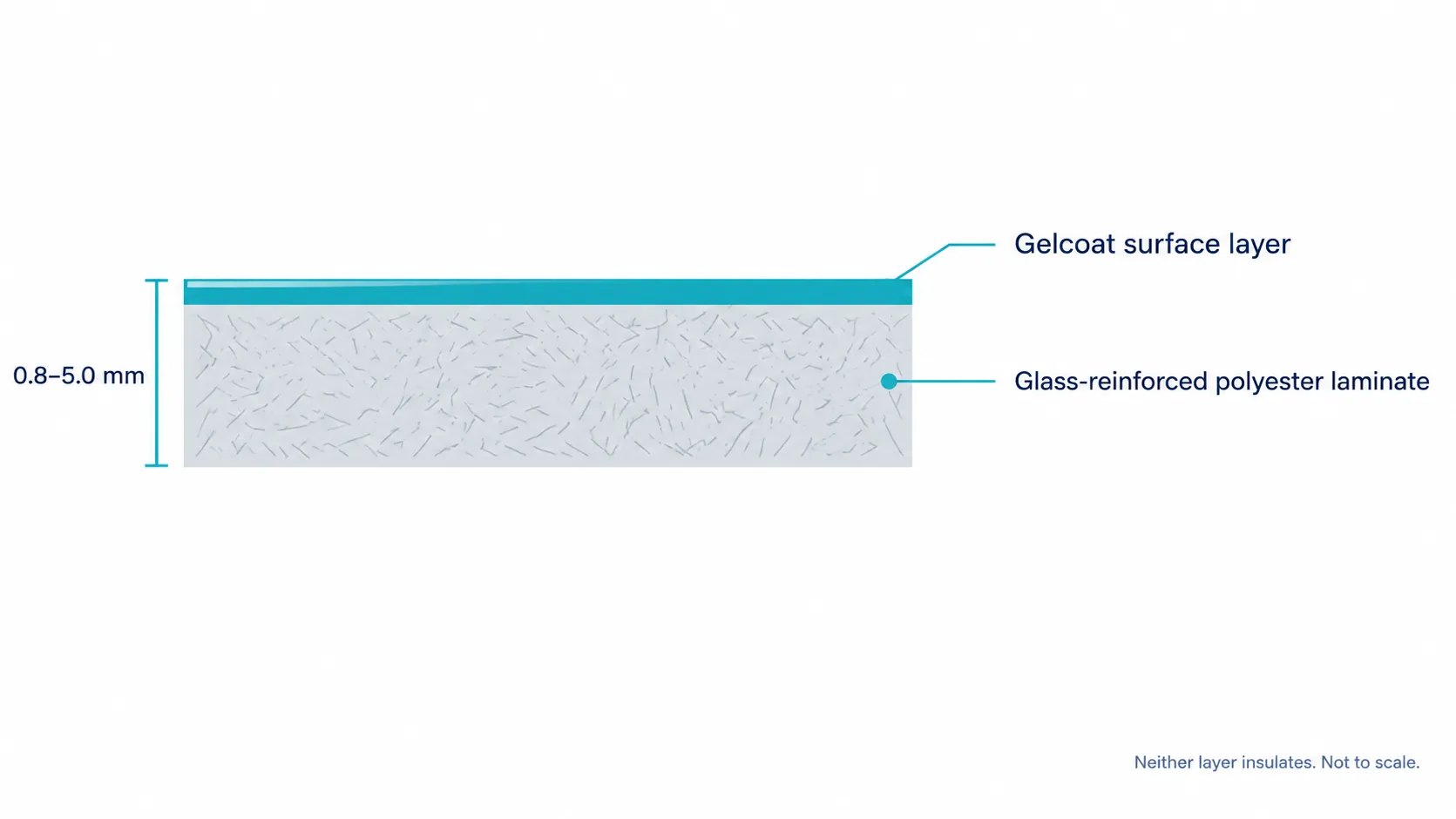
The sheet is produced in thicknesses from 0.8 mm to 5.0 mm, and a single roll is up to 3,400 mm wide and up to 120 m long.
Finished insulated panels are a separate product line, covered on our PU Sandwich Panels for Refrigerated Trucks page. If what you need is the complete panel rather than the facing material, that is the page to read. Where a gelcoat sheet is installed over a frame rather than laminated into an insulated panel, see FRP Gelcoat Panels for Truck Body Siding and Interior Liners.
Two different buyers sit on the same body, and they need different things from us:
If you are reading this page, you are most likely in the first group, which is why the sections below talk about lamination and vehicle duty rather than insulation performance.
| Face | Positions | What the sheet is doing there |
|---|---|---|
| Inner | Side walls, ceiling, front bulkhead, door inner face — the interior liner | Cargo-facing surface, washed down between loads |
| Outer | Exterior side walls, door outer face; roof, front and other positions assessed per body design | Weather-facing surface: sun, rain, road spray and washing |
At 3,400 mm wide, one sheet can cover the full height of most side walls, so no join is needed across the height. The roll length covers the wall length.
Which surfaces actually receive a gelcoat sheet is the body design’s decision, not a fixed rule. Some builders use a different material at the floor and around the rear frame, where mechanical abuse is highest.
The sheet itself is two layers, not three. A gelcoat surface layer is cured into a glass-reinforced polyester laminate behind it.
Neither layer insulates. Thermal performance comes entirely from the core that the panel maker adds when the panel is built.
A refrigerated body is a harder environment for a surface layer than a static cold room, because the body itself is moving.
Road vibration and panel flex. The sheet is bonded to a panel that sees that movement continuously rather than occasionally.
Thermal cycling. A reefer body works between ambient loading bays and deep-frozen carriage. The sheet has to hold its bond and its surface through that cycle.
Washdown between loads (inner face). Cargo-facing surfaces are cleaned between loads, often with detergents and sanitisers. A closed gelcoat face is the reason a gelcoat sheet is specified here rather than an open laminate.
Weather and road spray (outer face). The outer face is exposed to sun, rain, road spray and washing. Colour, finish, and the way the sheet is bonded and sealed at joints and edges matter more here than on the inner face.
Impact from cargo handling. Pallets, roll cages and forklift forks contact the inner walls. How a given impact turns out depends on the sheet thickness, the support behind it, and how hard the hit is.
For condensation behaviour in a static cold room, which is a different duty cycle with different answers, see FRP Gelcoat Panels for Cold Storage.
| Item | Detail |
|---|---|
| Sheet Thickness | 0.8 mm–5.0 mm (single-skin sheet) |
| Max Width | up to 3,400 mm |
| Roll Length | up to 120 m |
| Resin System | Unsaturated polyester (custom resin systems available) |
| Operating Temperature | −40 °C to +140 °C |
| Colours | Custom RAL available |
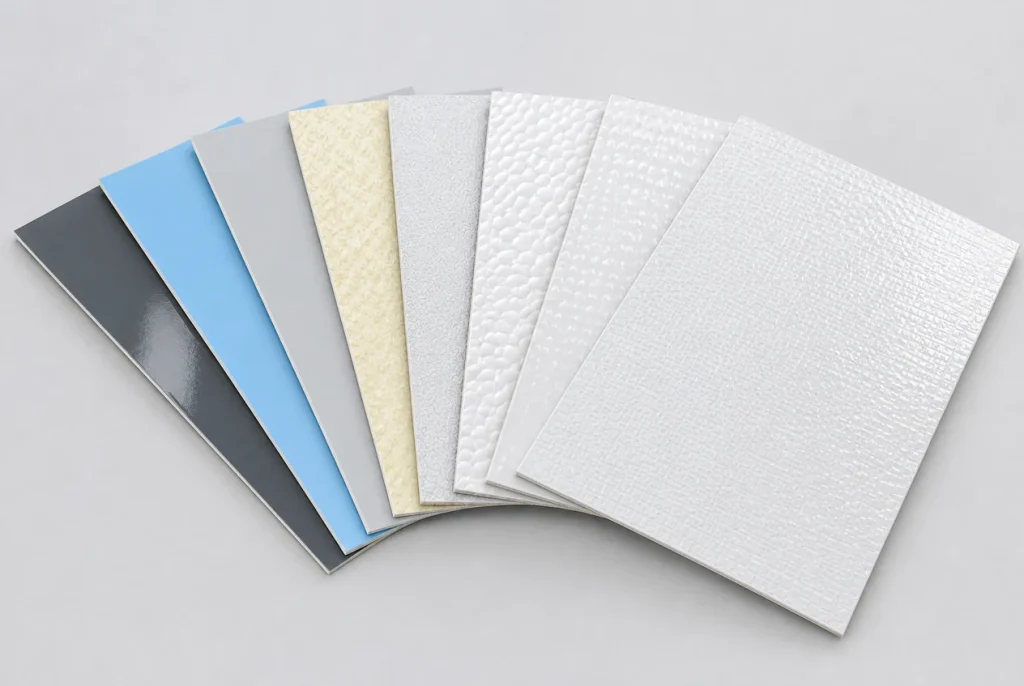
| Surface Finish | Glossy (standard) / Wood Grain / Trefoil (anti-slip) / Bubble / Pearl / Leather |
| Warranty | 10–15 years, subject to application and order terms; confirmed at quotation |
A note on the finish list: the table lists the full finish range of the line. For both faces of a refrigerated panel the finish normally specified is the smooth glossy one; the textured options exist for surfaces where slip resistance or a decorative effect is wanted, and those are specified per project rather than by default.
The sheet is supplied in whole rolls, subject to production requirements. Customers cut and handle the sheet on their own line. Piece sizes cut to a panel schedule are not part of this supply.
A: No. The sheet is the facing layer. Structural performance belongs to the panel assembly: the core, and the bond that the panel maker creates around it.
A: No. Insulation comes from the core. A gelcoat sheet adds a closed, cleanable surface and a defined colour, not thermal resistance.
A: The line covers 0.8 mm to 5.0 mm. Which point in that range suits your body depends on your laminate schedule, the support behind the sheet, and the abuse the face sees. The inner and outer faces may not call for the same gauge. Share those details and we will confirm the options; there is no single thickness we would recommend for every reefer body.
A: Yes. Panel makers laminate it to the outer face as well as the inner face. The two faces have different duties: the inner face meets cargo and washdown, the outer face meets weather, road spray and washing. Tell us which face you are laminating and the colour, and we will confirm the options. Where a sheet is installed over a frame rather than laminated into an insulated panel, see FRP Gelcoat Panels for Truck Body Siding and Interior Liners.
A: That depends on your core, your adhesive and your process. Tell us what you laminate with and we will confirm the back-face options before you order. A bonding trial on your own line is the surest check.
A: No. It is a cleanable wall and ceiling surface, not a surface intended for direct contact with food. Direct-contact applications sit with the food-grade product line; see Food Grade Gelcoat Panels.
A: Not from this line. It is supplied in whole rolls, and cutting to a panel schedule happens at the customer’s end.
We’d love to hear about your project — reach out anytime.
Thank you for contacting us,
we will get back to you in 24hrs!